
Year-Round Roof Maintenance in San Antonio: A Season-by-Season Guide


Roofs in Central Texas rarely fail all at once. They fail in small increments, usually in places no one is looking. A seam pulls apart a fraction of an inch during a 100-degree afternoon. A drain collects enough silt to slow water by a few seconds. A hailstone leaves a bruise that will not show up as a leak for another two years. By the time water reaches a ceiling tile, the roof has usually been telling that story for a long time.
Seasonal maintenance is how property owners get ahead of that timeline. It is not complicated work, but it does need to happen on a schedule that matches the local climate, and San Antonio has a climate that punishes roofs in ways most of the country does not.
What Actually Wears Out a Roof in Central Texas
Understanding the failure mechanisms makes the seasonal checklist far more useful, because you stop looking for damage in general and start looking for specific problems.
Ultraviolet exposure. Sunlight breaks down the chemistry of roofing materials. Membranes chalk and stiffen, sealants shrink and crack, and asphalt surfaces lose flexibility. Central Texas gets a heavy annual dose of this, which is why local roofs often age faster than the manufacturer's projected service life.
Thermal movement. A dark low-slope surface can run 50 to 80 degrees hotter than the surrounding air on a summer afternoon, then drop rapidly after a thunderstorm rolls through. That expansion and contraction works on every seam, flashing, and penetration, day after day. Thermal cycling is the single most underrated cause of roof leaks in this region.
Water that cannot leave fast enough. San Antonio does not get gentle rain. It gets several inches in a couple of hours. Drainage that seems adequate in April becomes a ponding problem in May, and standing water accelerates deterioration wherever it sits.
Hail and wind. Spring storms produce both. Damage is frequently cosmetic at first glance and structural underneath.
Occasional freezes. Hard freezes are not annual events here, but when they arrive they find every weak spot. Water that has already worked its way into a seam expands, and a minor defect becomes an open one.
Spring: Find What Winter and Early Storms Left Behind
Spring inspection is about damage discovery. Walk the roof after the first significant storm cycle and look for punctures, split seams, displaced flashing, and any place where the surface texture looks different from the area around it. Hail impacts often appear as dull circular marks or as scattered granule loss collecting at drainage points.
Check every penetration individually. HVAC curbs, vent stacks, conduit supports, and equipment mounts move independently of the roof deck and account for a large share of leaks. Confirm that pitch pans are full and that sealant has not shrunk away from the metal.
Clear drains, scuppers, and low areas of debris before storm season builds. Water needs a clean path off the roof within 48 hours of rainfall. Anything slower deserves attention.
Spring is also one of the two best application windows for protective roof coatings in this area, because temperatures are moderate and the surface has time to cure properly before extreme heat arrives.
Summer: Reduce Heat Load Before It Shortens Roof Life
Summer maintenance in San Antonio is less about repair and more about temperature management. Every degree of surface heat you remove reduces the thermal stress working on your seams and slows the aging of the material underneath.
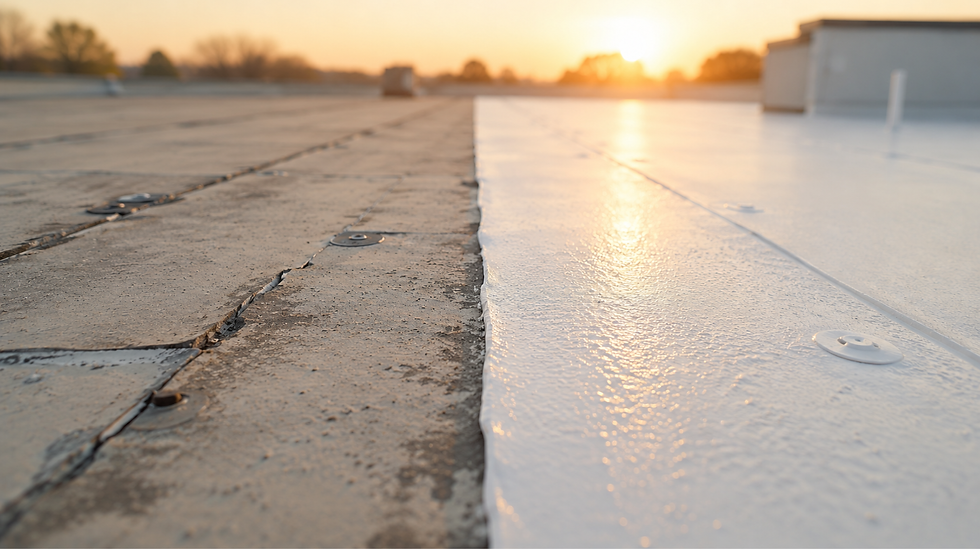
Reflective roof coating systems address this directly. A light-colored, high-reflectance surface sends a large portion of solar energy back into the atmosphere instead of letting it soak into the assembly. The link between higher surface reflectance and lower cooling demand is well documented, and the practical results show up in three places: cooler interior spaces, less strain on rooftop HVAC equipment, and a slower rate of material breakdown across the entire roof.
Mid-summer is also the right time to check interior conditions. Ceiling stains, humidity that will not respond to the thermostat, and unusually high cooling bills are frequently roof-related. Attic and plenum temperatures tell you a great deal about how much heat the roof surface is absorbing.
Avoid unnecessary rooftop traffic in extreme heat. Membranes and coatings are softer at high surface temperatures, and foot traffic does more damage in August than it does in March.
Fall: The Preparation Season
Fall is the most valuable maintenance window of the year in Central Texas, and it is the one most often skipped.
Storm activity is not over, drainage still needs to be clear, and this is the last comfortable stretch to complete repairs before the year ends. Inspect the full field of the roof, not just the perimeter. Look for blisters, soft spots underfoot, open laps, and rust at fasteners or metal edges. Document what you find with photographs and dates, because a maintenance record is what separates a warranty claim that gets approved from one that does not.
Fall is also the second strong window for coating work. Mild temperatures and lower humidity give elastomeric, silicone, and acrylic systems ideal curing conditions. If an assessment shows the roof is structurally sound but the surface is weathered, this is when restoration makes the most sense. Click here to learn more about commercial roof care tips that extend roof life.
Winter: Watch the Weak Points
Winter maintenance here is monitoring rather than heavy work. Cold fronts bring wind that lifts loose edge metal and flashing, and the occasional hard freeze exposes anything already compromised.
After any freeze event, check for new cracking around penetrations and seams, and inspect interior spaces for fresh moisture. Winter is also a practical time to review the previous year's inspection reports, evaluate whether repairs are becoming repetitive in the same areas, and plan the next budget cycle. Repeated repairs in the same section of roof usually indicate a system-level problem that patching will not solve.
Where Roof Coatings Fit Into a Maintenance Plan

A protective roof coating is not a substitute for maintenance. It is what maintenance becomes when the underlying roof is sound but the surface has given up its weather resistance.
Silicone systems handle ponding water and UV exposure well, which makes them a strong fit for low-slope commercial roofs with imperfect drainage. Acrylic systems offer excellent reflectivity and hold up well in dry, sunny climates. Elastomeric systems stretch and recover with the roof as it moves, which addresses the thermal cycling problem directly.
The right choice depends on the substrate, the slope, the drainage, and the condition of what is already there, which is why a proper assessment always comes before a recommendation. Residential property owners in San Antonio, New Braunfels, and Boerne can start that process with a virtual roof quote before scheduling an on-site evaluation.
Building a Maintenance Schedule That Holds Up
For most Central Texas properties, the workable rhythm is straightforward:
Two professional inspections per year, ideally in spring and fall
A post-storm inspection after any hail, high wind, or extreme rainfall event
Quarterly drainage checks, more often if trees overhang the building
A written record of every inspection, repair, and photograph
Leave rooftop work to trained crews. Roof surfaces are slippery when wet, deck conditions are not always visible from above, and rooftop equipment introduces electrical hazards. What property owners can handle from the ground is just as valuable: watching for interior stains, tracking cooling costs month over month, and noting how long water sits on the roof after a heavy rain. Bring those observations to your next scheduled inspection.
Signs That Deserve a Professional Look Now
Do not wait for the next scheduled visit if you notice water stains that appear or grow after rain, visible ponding 48 hours after a storm, seams or flashing that have separated, soft or spongy areas underfoot, or cooling costs that climbed without a change in usage. Each of these indicates a problem already in progress.
Frequently Asked Questions
How often should a commercial roof be inspected in San Antonio?
Twice a year is the baseline, with additional inspections after hail, high winds, or heavy rainfall. Properties with significant rooftop equipment or tree cover benefit from quarterly checks.
When is the best time to apply a roof coating in Texas?
Spring and fall generally offer the best conditions. Moderate temperatures and lower humidity allow proper curing, and the surface is not subject to the extreme heat that complicates application in July and August.
Can a coating be applied to a roof that is already leaking?
Active leaks and damaged areas must be repaired first. Coating over an unresolved problem traps moisture and shortens the life of the new system. A proper assessment identifies what needs correcting before any coating work begins.
Do reflective coatings actually lower energy bills?
On low-slope and metal roofs, yes. Reducing surface temperature lowers the heat load entering the building, which eases demand on cooling equipment. The size of the savings depends on insulation levels, building use, and how dark the existing surface is.
How long does a roof coating system last?
Depending on the material selected and the thickness applied, most systems perform for 10 to 20 years. Many can be recoated at the end of that period, extending protection without disturbing the existing roof.
Is maintenance worth the cost on an older roof?
Often, yes. Age alone does not determine whether a roof can be restored. Deck condition, moisture content, and the state of the existing membrane matter far more, and an inspection will show whether restoration is a realistic option.
Conclusion
Roofs in Central Texas do not need constant attention. They need the right attention at the right time of year. Spring finds storm damage, summer manages heat, fall prepares for what is coming, and winter watches the weak points. Property owners who follow that rhythm spend less over the life of the roof and face fewer surprises, because problems get caught while they are still small and inexpensive to correct.
If your roof has not been professionally evaluated in the past year, or if you are seeing repeat repairs in the same areas, an assessment is the logical next step. The team at RoofHelp! | Coatings works with commercial and residential property owners throughout San Antonio, Austin, New Braunfels, Boerne, and San Marcos to evaluate roof condition and determine whether restoration and coating systems make sense for the building. Schedule your roof assessment today and get a clear picture of where your roof stands before the next season arrives.

Comments