
Metal Roof Restoration: A Complete Guide to Extending Your Roof's Life


Metal roofs are built to last, often outperforming other roofing materials by decades. But that doesn't mean they're maintenance-free. Small issues like surface rust, loose fasteners, or worn seams can turn into expensive leaks and structural damage long before a metal roof reaches the end of its natural lifespan.
For property owners in San Antonio and across Central Texas, where intense summer heat and sudden storms put extra strain on roofing systems, restoration is often the smarter first move before jumping straight to replacement. Here's how the process works, from inspection through long-term maintenance, so you can make an informed decision about your property.
Start With a Thorough Roof Inspection
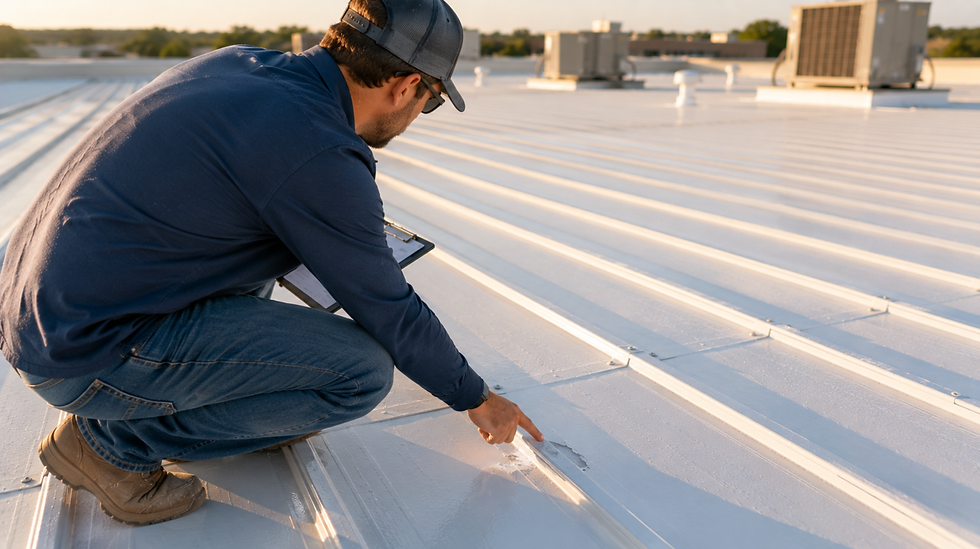
Every successful restoration begins with knowing exactly what you're working with. A proper inspection identifies problem areas before they become expensive repairs.
What a Roof Inspection Should Cover
A thorough inspection looks at more than just the visible surface. It should include:
Rust spots, corrosion, and peeling paint
Loose, missing, or backed-out fasteners
Gaps or cracking around seams and flashing
Ponding water or drainage issues
Signs of water intrusion in the attic or ceiling below
Documenting each issue with photos and notes creates a clear roadmap for the repair and coating work ahead. It also gives you something to compare against during future inspections, which is especially useful for commercial properties managing multiple roof assets.
Clean and Prepare the Surface
Coatings and sealants only perform as well as the surface underneath them. Dirt, chalking paint, and loose rust all interfere with adhesion, which is one of the most common reasons restoration work fails early.
Proper preparation typically involves:
Pressure washing to remove dirt, debris, and loose coatings
Wire brushing or grinding away rust and flaking paint
Treating corroded areas to stop further oxidation
Sanding rough spots and clearing away dust before coating
Skipping surface prep is one of the costliest mistakes a property owner can make. Even a premium coating will fail early if it's applied over a surface that wasn't properly prepared.
Recoating vs. Replacement: Which Makes Sense?
Not every metal roof is a good candidate for recoating. If the underlying structure is sound and damage is limited to surface-level wear, recoating typically restores waterproofing and reflectivity at a fraction of the cost of a full replacement, often in a matter of days rather than the weeks a full replacement can take, with far less disruption to occupants or business operations.
If the roof deck is compromised or panels are extensively damaged, a licensed roofing contractor may need to evaluate whether more extensive repair or replacement is the better long-term fit. But for most well-maintained metal roofs showing surface rust, fading, or minor wear, recoating with a high-performance roof coating system is a cost-effective way to add another decade or more of protection, often with the added benefit of improved energy efficiency that a standard replacement wouldn't automatically include.
Repair and Seal Before Coating
Any leaks, holes, or damaged fasteners need to be addressed before a coating goes on. Coatings are designed to protect and waterproof a sound roof, not to fix structural problems underneath it.
Effective repair work usually includes:
Patching small holes and replacing severely damaged panels
Tightening or replacing loose fasteners
Sealing seams and joints with flexible, weather-resistant sealants
Allowing all repairs to cure fully before moving to the coating stage
Rushing this step is a common cause of early coating failure. A coating applied over an unsealed leak just traps the problem underneath it.
Applying Protective Roof Coatings the Right Way
Once the surface is clean, repaired, and dry, it's time for the coating itself. Elastomeric and silicone-based roof coatings are popular choices for metal roofs because they stay flexible through temperature swings and resist UV degradation.
A few things make a real difference in how long a coating holds up:
Apply multiple thin coats rather than one heavy coat
Allow full drying time between coats
Pay close attention to seams, edges, and fasteners, since these are the most leak-prone areas
Avoid application during extreme heat, cold, or high humidity
Reflective Coatings and Texas Heat
For properties in San Antonio, Austin, Boerne, New Braunfels, and San Marcos, reflective roof coating systems offer a real advantage. By reflecting solar heat instead of absorbing it, these coatings can lower interior temperatures and cooling costs during peak summer months. Roofs rated for how well they reflect sunlight and release absorbed heat give property owners a reliable way to compare coating options before deciding on one.
Maintain Your Metal Roof After Restoration
Restoration extends a roof's service life, but it isn't a one-time fix. A few habits go a long way toward protecting that investment:
Schedule inspections at least twice a year
Clean gutters and drains quarterly to prevent water backup
Touch up coating wear as soon as it appears
Trim overhanging branches that can drop debris or cause abrasion
Watch energy bills for early signs of coating breakdown
Click here to learn more about the benefits of roof coating systems and how they extend roof performance over time.
Why Professional Guidance Matters
Getting the sequence of inspection, repair, and coating right often determines whether a roof lasts another five years or another twenty. At RoofHelp! | Coatings, our team works with San Antonio-area property owners to assess roof condition and recommend the coating system that fits their building and budget. If you're weighing your options, a professional roof coating consultation can help you figure out whether recoating is the right path for your property.
Frequently Asked Questions
How long does a metal roof coating last?
Most high-quality coatings last 10 to 15 years when applied over a properly prepared surface, though lifespan varies based on climate, coating type, and maintenance.
Can any metal roof be recoated?
Most metal roofs are good candidates as long as the structure is sound. Roofs with significant structural damage or widespread panel failure may need further evaluation before coating.
Does recoating actually lower energy costs?
Reflective coatings can reduce heat absorption significantly, which often translates into lower cooling costs during hot Texas summers.
How often should a metal roof be inspected after restoration?
Twice a year is a good general rule, with additional checks after major storms.
Is recoating cheaper than full roof replacement?
Yes, in most cases. Recoating addresses surface-level wear at a lower cost and with far less disruption than a full replacement.
Conclusion
Metal roof restoration protects your property, extends the life of your roof, and reduces long-term costs when each step is done in the right order. Starting with a detailed inspection, preparing the surface properly, addressing repairs, and applying a quality protective coating gives your roof the best chance at another decade or more of reliable performance. Consistent maintenance afterward keeps that investment paying off for years to come.


Comments